

Last Updated: March 24, 2026

Golf club selection is a key factor in your overall performance on the course, and one club that often gets overlooked is the humble 4 iron.
As fairway woods and high-tech hybrids gain popularity for their forgiveness and versatility, some of the longer irons, like the 4 iron, have gradually lost their prominence in the modern golf bag.
Due to its long length and low loft, the 4 iron can be notoriously tricky to hit consistently, which is why some players substitute it for a more user-friendly alternative like the 5 hybrid.
However, it’s important not to write off the potential of the 4 iron in your golfing arsenal!
There are a range of valuable advantages to using a 4 iron and it continues to serve as a versatile option for adding finesse to your long game.
Once you become familiar with its intricacies, the 4 iron becomes a hidden weapon capable of executing long-distance approach shots and lower-flighted punch shots.
In this guide to the 4 iron golf club, we’ll explore the club in detail including when and how to use it to our advantage on the golf course!
Let’s begin!
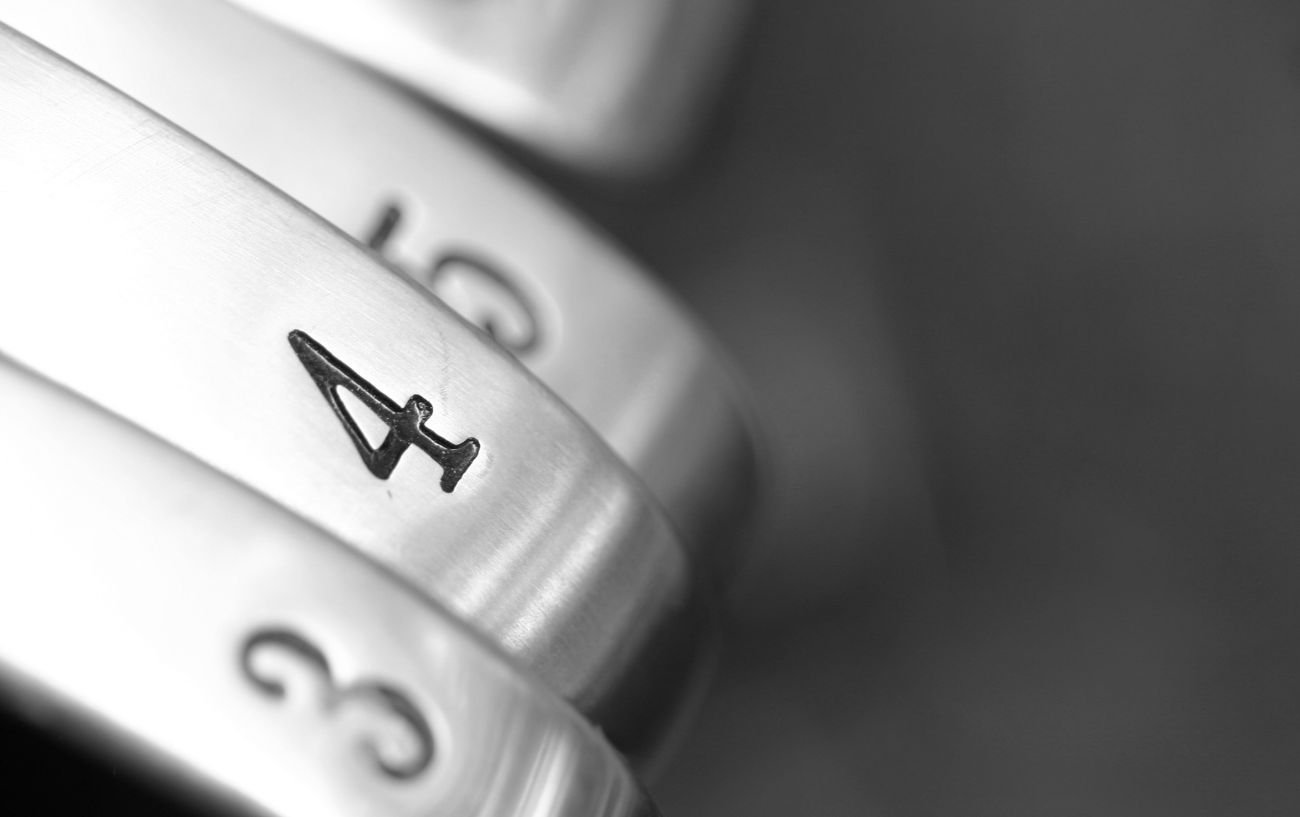
What is a 4 iron?
The 4 iron belongs to the category of long irons, which traditionally include irons 2, 3 and 4.
Long irons are characterized by their larger club shafts and lower degrees of loft in comparison to mid irons and wedges.
These properties make the 4 iron the perfect candidate for producing a penetrating ball flight over a longer distance with precision.
In the modern game, the 4 iron is usually one of the lowest, if not the lowest, numbered iron carried in a standard 14-club golf bag.
Players who struggle to hit their long irons have the option to substitute the 4 iron out for an easier-to-hit fairway wood or hybrid that share similar degrees of loft and carry.
The reason these modern alternatives are slightly easier to hit is because they have larger club heads, lighter shafts, and typically require less swing speed to produce an accurate strike vs the 4 iron.
Having said this, there are significant differences in ball flight between the two options to be aware of.
The 4 iron produces a lower trajectory than woods or hybrids and maintains the high level of control you get from the iron clubs.
The 4 iron is therefore a dependable option for adding finesse to your long game, navigating narrow fairways, or when you need to cut under the wind in blowy conditions.

Loft of a 4 Iron
The standard loft of a 4 iron is between 21 and 24 degrees, making it one of the flatter clubs in the iron family.
To compare this with common 4 iron alternatives, the 7 wood has 20-22 degrees of loft, and the 5 hybrid has about 25 degrees of loft give or take.
The lower loft on the 4 iron produces a low trajectory and reduced backspin.
Low-lofted clubs require significant club speed to get the ball airborne, which is a big reason why amateur golfers struggle to get their 4 irons traveling.
It’s important to note when using your 4 iron that the low loft also tends to result in a longer roll-out time once the ball lands.
This means it can be more challenging to hold greens in your approach shots when using a 4 iron compared to mid-irons or wedges.
The 4 iron’s loft becomes advantageous in situations where you aim to achieve a penetrating ball flight, making it an excellent choice for executing knockdown or punch shots.
These shots, known for their strong and low trajectory, are used to navigate challenging situations such as headwinds, tight corridors, escape from thick rough, or safely maneuver under low-hanging obstacles like trees.
Length of a 4 Iron
The average 4 iron club length is 38 to 39 inches.
This is a few inches longer than your typical mid irons and wedges, designed to help golfers maximize distance by generating increased club speed during the swing.
While a larger club size can result in greater speed and distance, there is a caveat: the 4 iron can be quite demanding to swing and consistently strike the ball with.
Accuracy, therefore, becomes more vital than ever to execute successful shots with your 4 iron.
The longer shaft length and increased swing speed make it harder to guage the precise location of the club head at the low point of your swing, making crisp ball-then-turf contact more challenging.
It is important to make sure the length of your 4 iron is correctly fitted to suit your unique body shape to avoid making any unhealthy compensations in your setup or swing.
Related Article: Golf Club Length Chart + How To Measure For Golf Clubs

Distance charts for a 4 Iron
On average, a 4 iron can hit the ball anywhere between 160 and 200 yards.
Familiarizing yourself with the individual yardages for each golf club is going to help you smarten your game strategy when it comes to club selection on the course.
With that said, let’s find out where the 4 iron comes into play!
Here are 4 iron distance charts for male, female, and senior golfers by skill level:
Male Average Distance for a 4 iron by skill level
| Club | Beginner | Average | Good | Excellent |
| 4 Iron | 125 yds | 160 yds | 170 yds | 195 yds |
Female Average Distance for a 4 iron by skill level
| Club | Beginner | Average | Good | Excellent |
| 4 Iron | 90 yds | 120 yds | 150 yds | 180 yds |
Senior Average Distance for a 4 iron by skill level
| Club | Senior Average Distance | Senior PGA Tour Average Distance |
| 4 Iron | 145 yds | 200 yds |
PGA Tour Average Distance for a 4 iron
| 4 Iron | 203 – 254 yds |
Average Distance for a 4 iron by swing speed
| Club | 60 mph | 70 mph | 80 mph | 90 mph | 100 mph | 110 mph | 120 mph | 130 mph | 140 mph | 150 mph |
| 4 Iron | 110 | 126 | 145 | 165 | 180 | 190 | 208 | 226 | 245 | 264 |
While distance charts are a handy resource to aid club selection, keep in mind that the distances a golf club can hit the ball can ultimately depend on several factors.
These include weather and ground conditions, tee height, the slope of the terrain, and the swing mechanics of the golfer.

When to Use a 4 Iron
Now that we have an understanding of the 4 iron club, let’s explore the situations where it is commonly used on the golf course.
The 4 iron is mainly used for hitting long shots from the fairway when there is a substantial distance to cover in your approach to the green.
It is frequently chosen as an option for the second shot on long par 5 or 4 holes.
Golfers may also choose to tee off with a 4 iron on certain par 3 courses, where the distance to the green is within reach and using a driver is unnecessary.
Additionally, the 4 iron offers decent control when faced with a strong headwind thanks to its lower piercing trajectory which helps to combat the wind resistance.
If you’re playing a links-style course that is exposed to the elements and want to limit the amount your ball gets carried by the wind, the 4 iron becomes a welcome inclusion in your golf bag!
Lastly, the 4 iron is an excellent choice when faced with a tight fairway or narrow corridor on the course where a high-flying shot might risk going off-course or into hazards.

Setup with a 4 iron
Having the correct setup with your 4 iron goes a long way to ensuring a solid and consistent strike with this tricky club.
Here are some key steps to follow when setting up with a 4 iron:
- Ball Position: Position the golf ball towards the front of your stance. Place it around one or two ball widths inside your left heel (for right-handed golfers). As the irons get longer, the ball position generally moves closer to the front foot.
- Posture and Grip: Widen your stance slightly more than normal and maintain a balanced and athletic posture throughout the setup. Hold the club a little further out from the body than your wedge setup. Adopt a firm yet flexible neutral grip on the club.
- Weight Distribution: Distribute your weight 55/45 in favor of your front foot. This helps to eliminate fat shots that come from consciously trying to help the ball in the air due to the low loft of the club.
- Swing Technique: Swing with pace while still maintaining your usual rhythm and focus. You need to generate club head speed to get the ball off the ground when using longer, low-lofted clubs but the swing motion should not be treated any differently to your other irons or wedges. Despite the forward ball position, aim to hit down on the ball still and create a small divot. Finally, perform a strong follow through to harness the power of the shot.
Practice these steps regularly and you will be positioned for success with your 4 iron!

The main 4 iron takeaways
While 4 irons may not be the most popular club, they are by no means obsolete! Many pros still choose to include one in their tour bags, and the club remains a versatile option on the golf course that should not be overlooked.
Key takeaways:
- Expect a low trajectory, reduced backspin on your golf ball, and more roll time once the shot lands with your 4 iron.
- Select a 4 iron when playing your furthest approach shots to the green on long par 4 and 5s, or teeing off on certain par 3s.
- A 4 iron is great for playing into strong headwinds or when you need to navigate tight situations that require strict height management.
With dedicated practice and perseverance at the range, you can harness the 4 iron’s potential and make it a valuable option in your game!


