Last Updated: September 13, 2026
Walk into any pro shop and the wedges all look similar: a head, a face, a row of horizontal lines. Those lines, the grooves, do most of the work that makes a 56-degree shot check up by the flag instead of skidding past it. This guide explains what wedge grooves actually do, the physics of how they grab the ball, what the USGA rules force manufacturers to build, and how quickly grooves wear out in real use, so you know when to retire a wedge before it costs you strokes. Grooves are only half the story—the other big variable in how a wedge interacts with the turf is wedge bounce, which determines whether the sole digs or glides through impact.
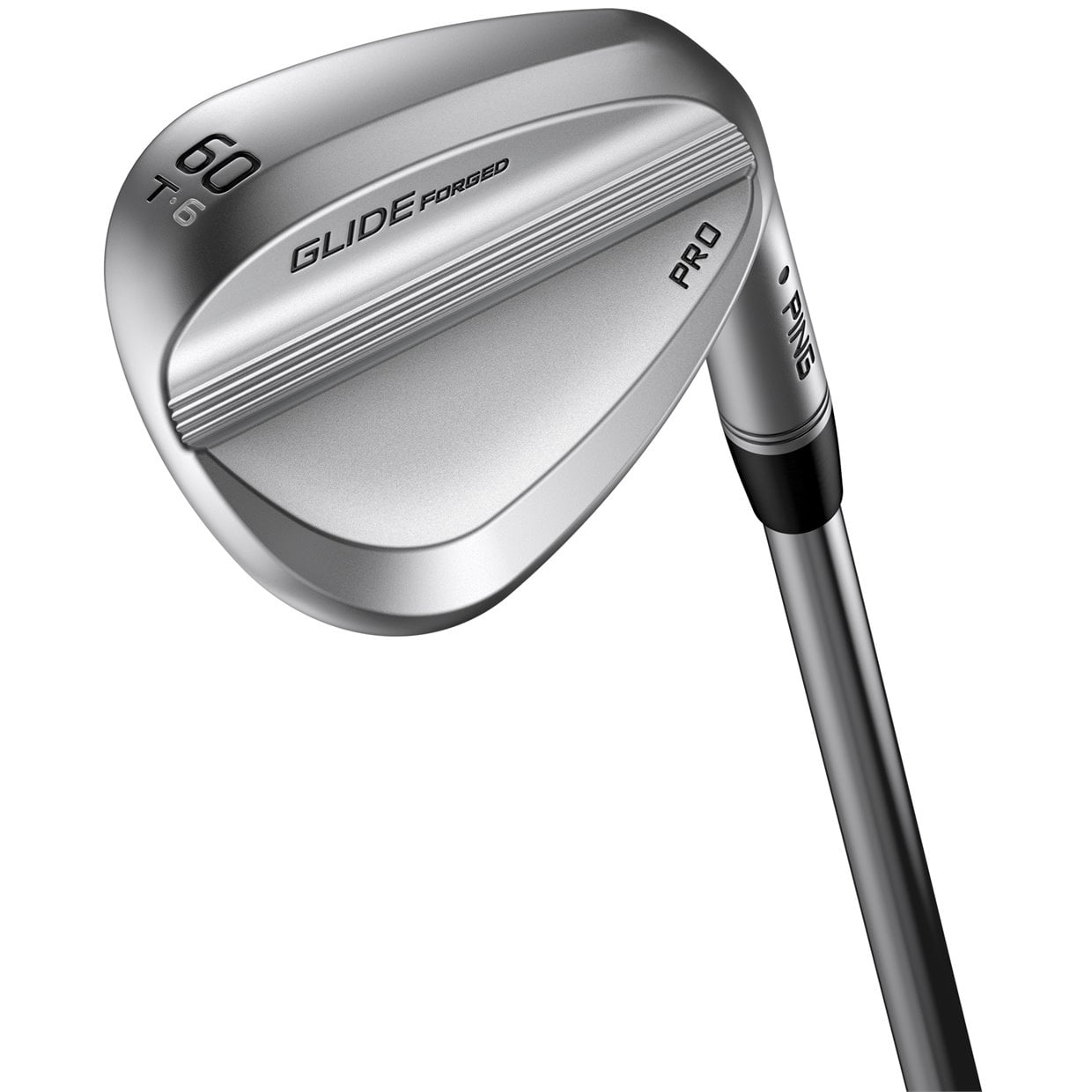
What Wedge Grooves Actually Do
Grooves serve two related jobs at impact. First, they create the consistent, high-friction contact between clubface and ball that produces backspin. Second, they channel away the stuff that would otherwise sit between the face and the ball: dew, mud, grass, sand, and the thin film of moisture that exists even on a clean ball in dry weather. Without grooves, a wedge face is too slick to grab the cover and apply the tangential force that makes the ball rotate backwards as it leaves the face.
This matters most on partial wedge shots from anywhere around 30 to 110 yards, where you want the ball to land softly and stop. From a clean fairway lie with a sharp groove, a tour player can generate 9,000 to 11,000 rpm of backspin with a 60-degree wedge. From a worn groove or a wet lie, that number can drop by 2,000 to 3,000 rpm, which is the difference between a ball that backs up off the flag and one that releases ten feet past it.
A more complete picture of how spin gets created at impact also depends on the angle the club approaches the ball, which we cover in the spin loft explainer. Grooves do not create spin on their own; they preserve and transmit the spin your strike is already trying to produce.
The Physics of Friction and Spin
When the clubface meets the ball, two forces act on the cover. A normal force compresses the ball against the face. A tangential force, parallel to the face, makes the ball roll up the face for the few hundred microseconds it is in contact. That rolling, called gear effect along the face, is what gives the ball its backspin.
The tangential force is limited by friction. Friction depends on three things: the coefficient of friction between the materials, the normal force pressing them together, and the cleanliness of the contact patch. The groove pattern raises the effective coefficient by giving the cover something to deform into, which momentarily locks the ball to the face. The land between grooves, the polished metal flat between each cut, then provides the smooth, hard surface that compresses the ball.
From a clean dry lie, the ball cover does most of the work and you generate close to the maximum spin the loft allows. From a wet or grassy lie, water and vegetation get between the cover and the face. Without grooves, that liquid film would prevent direct contact and friction would plummet. Grooves give the water somewhere to go.
USGA Rules and the 2010 Groove Rollback
Until 2010, manufacturers were producing U-shaped, or box, grooves with sharp, near-vertical walls. These grooves bit into the cover aggressively and produced enormous spin from the rough, where the grass acted as a lubricant that older V-grooves could not handle. Tour players were able to attack pins from terrible lies, and the governing bodies decided that punished poor driving accuracy too lightly.
The 2010 rule changed two things. It limited cross-sectional area to 0.0030 square inches, capped edge radius at a minimum of 0.010 inches, and limited groove edge sharpness so the corners could no longer be near 90 degrees. The result is that modern conforming wedge grooves are slightly rounded at the edges and shallower than the U-grooves of the late 2000s. From a clean fairway lie, spin is similar to the old grooves. From the rough, modern wedges produce noticeably less spin, exactly as intended.
If you are buying a new wedge today, every model from every major manufacturer conforms to the 2010 specification, so head-to-head differences come down to manufacturing precision, the milling pattern between grooves, and the surface treatment, rather than groove geometry itself.
Face Milling and Micro-Texture
Modern wedges add a second layer of friction beyond the grooves themselves: micro-milling on the lands between grooves. Look at a Vokey SM10, a Cleveland RTX 6, or a Mizuno T24 under a magnifier and you will see fine cross-hatched ridges between every groove. These micro-grooves are too small to count toward the USGA cross-section limits, but they raise friction noticeably on partial shots where the ball barely engages the deep grooves.
This is why a chip from 15 yards with a tour wedge spins more than the same chip with a 10-year-old beater wedge, even if the deeper grooves look intact. The micro-texture is the first thing to wear off, and once it is gone, the difference shows up on the short, low-velocity shots where the ball never really embeds into the main grooves.
The choice of sole grind interacts with this as well, since a clean strike on the equator of the ball is required to keep the contact patch on the milled face area. The guide to wedge grinds walks through how grind shapes match different lies and swings.
How Lies Change Groove Performance
The same wedge with the same grooves behaves very differently from different lies. From a clean, dry fairway, you should expect peak spin: the ball cover sits directly against the face, the grooves channel a tiny amount of moisture, and the strike is unimpeded. From a wet fairway or after morning dew, spin can drop 15 to 25 percent because water films between the face and ball, and even good grooves cannot remove all of it in the half-millisecond of contact.
From light rough, grass blades slide up the face during impact, occupying space that the cover would otherwise occupy. Spin can fall by 30 to 50 percent. Knowing this is a real shot-selection tool: from rough around the green, a flop with backspin is rarely possible, and a lower trajectory shot that releases is a more honest play. The flop shot guide covers when this kind of shot actually works.
From a wet bunker, sand behaves like a thick lubricant and groove design matters less than entry point and clubhead speed. From a fluffy lie in deep rough, you may produce almost no spin at all and you should plan for the ball to come out hot.
How Quickly Wedge Grooves Wear
Wear depends on three things: how many shots you hit, what you hit them off, and how you store and clean your clubs. Cast-iron wedges in standard chrome plating tend to hold spin numbers for roughly 75 to 100 rounds of typical use, which works out to around 18 months for a once-a-week golfer who hits a normal share of wedge shots. Soft-carbon-steel forged wedges, like the Mizuno T24 or some Vokey models, wear more visibly because the metal is softer, and the micro-milling can fade in as little as 12 months.
Sand wears grooves dramatically faster than turf. Range mats wear them faster than fairway turf. If you take 200 wedge shots a week off a hard practice mat, expect to see groove wear inside six months. If you only ever hit wedges from grass, the same shaft and head will last several seasons.
The signal that grooves are gone is rarely visual at first. The wedge looks fine but spins less, and short shots run further than they used to. A useful test is to hit a 50-yard pitch with a new wedge of the same loft, side by side, and compare release. If the new wedge stops three or four feet sooner from the same swing on the same green, your grooves are toast.
How to Tell Your Grooves Need Replacing
Run a fingernail across the grooves at right angles. Sharp, healthy grooves catch the nail and feel rough. Worn grooves let the nail slide across with less resistance. Now look at the leading edge of each groove: if you see a rounded, polished shoulder rather than a crisp corner, that groove is no longer biting the cover the way it should.
A second test is to feel the land between grooves with a fingertip. New milled wedges feel almost rasp-like across the lands. Old wedges feel smooth. That smoothness is the loss of micro-texture and it correlates closely with spin loss on shots inside 50 yards.
One more practical signal: if you are missing greens long, especially from clean fairway lies inside 100 yards, the wedge is suspect. Spin acts as a built-in distance regulator because backspin pulls the ball down through the air and stops it short. Without spin, your normal 90-yard shot now flies 95 and rolls another five.
Caring for Your Wedges
Clean grooves are the cheapest spin in golf. A wedge with mud or grass packed into the grooves performs like a worn wedge, even when it is brand new. After every wedge shot from a wet or grassy lie, wipe the face. Once per round, brush the grooves out with a stiff nylon brush. Once per month, soak the face for ten minutes in warm soapy water and scrub each groove with a soft toothbrush. Avoid wire brushes on chrome wedges; they scratch the lands and accelerate micro-texture loss.
Headcovers help, particularly on raw or unplated finishes that rust quickly. Do not leave wedges in a wet bag overnight. Surface rust on the face is fine and many players prefer it, but rust pitting deep in the grooves themselves will eventually round the edges.
A common question is whether you can re-sharpen grooves with a groove sharpening tool. Technically you can. The conforming-equipment problem is that any modification that increases groove cross-section or sharpens an edge below the legal radius makes the club non-conforming for tournament play. For pure social golf, re-sharpening is a temporary fix at best because it does not restore the micro-milling on the lands, which is where most of the lost spin actually lives.
The Bottom Line
Wedge grooves do not create spin out of nothing, but they preserve the spin your strike is trying to deliver, and they are what keep the ball from sliding off a clean wet face. The legal rules of 2010 mean every modern wedge starts roughly equal from the fairway, and tournament-tested differences come from face milling, build precision, and finish. Real-world spin drops come from two predictable causes: wet or grassy lies that put material between cover and face, and worn grooves that no longer have the sharp edges and milled lands they had at the start. Keep the face clean, retire your 56 and 60-degree wedges every 75 to 100 rounds, and you will get the spin you are paying for.